
A Very Different Drummer
Before the world heard the music, one woman heard the child.
In eighteenth-century Europe, Anna Maria Mozart travels restless roads beside her gifted young son — through crowded cities, candlelit courts, and the growing weight of extraordinary expectation.
To the world, Wolfgang Amadeus Mozart is a marvel. To her, he remains fragile, feverish, fiercely alive — a child whose brilliance carries both wonder and cost.
A Very Different Drummer: The Mother of Mozart is a historical literary novel exploring motherhood, sacrifice, ambition, and the quiet strength that stands before greatness.
Synopsis
‘A mother’s love. A prodigy’s destiny.’
Anna Maria Pertl expects a modest life in Salzburg — marriage to a court musician, a household to manage, children to raise. But history begins to move to a different rhythm when her youngest son reveals a gift unlike anything the world has seen.
As the Mozart family journeys through the courts and cities of eighteenth-century Europe, Anna Maria is drawn into the exhausting machinery surrounding genius: crowded roads, aristocratic expectation, financial strain, public display, and the relentless demands placed upon a gifted child.
To others, Wolfgang Mozart is a marvel. To her, he is still a boy — feverish, fragile, fiercely alive. Behind every ovation lies exhaustion. Behind every prodigy stands a mother quietly measuring the cost.
A Very Different Drummer: The Mother of Mozart is a sweeping work of historical biographical fiction exploring motherhood, sacrifice, ambition, and the quiet strength that shaped one of history’s greatest musical minds.
Mozart historical fiction
A novel from the mother’s side of genius
Mozart’s name is usually told from the stage: the prodigy, the composer, the myth. This novel turns the room around. It asks what genius looked like to the woman who packed the trunks, watched the illnesses, managed the small domestic anxieties, and loved the child before the world claimed him.
Rather than treating Anna Maria Mozart as a footnote, A Very Different Drummer places her at the emotional centre of the story. The result is Mozart-era historical fiction with a quieter focus: family, fatigue, travel, ambition, tenderness, and the human cost behind celebrated brilliance.
Historical inspiration
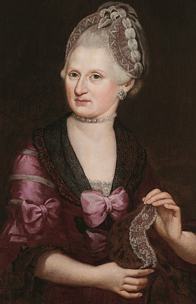
Who was Anna Maria Mozart?
Anna Maria Pertl Mozart was the mother of Wolfgang Amadeus Mozart and Maria Anna “Nannerl” Mozart. History usually records her in relation to others: wife of Leopold, mother of Wolfgang, travelling companion to a prodigy. Yet her life sat at the centre of the family story.
She witnessed the promise, pressure, illness, admiration, and strain that accompanied the Mozart children’s extraordinary gifts. In A Very Different Drummer, Margaret A. Holmes imagines the private emotional world of a woman too often left standing just outside the spotlight.
This novel is historical fiction inspired by real people and events, not a formal biography.
Setting the scene
Mozart’s Europe: roads, courts, cities, and cost
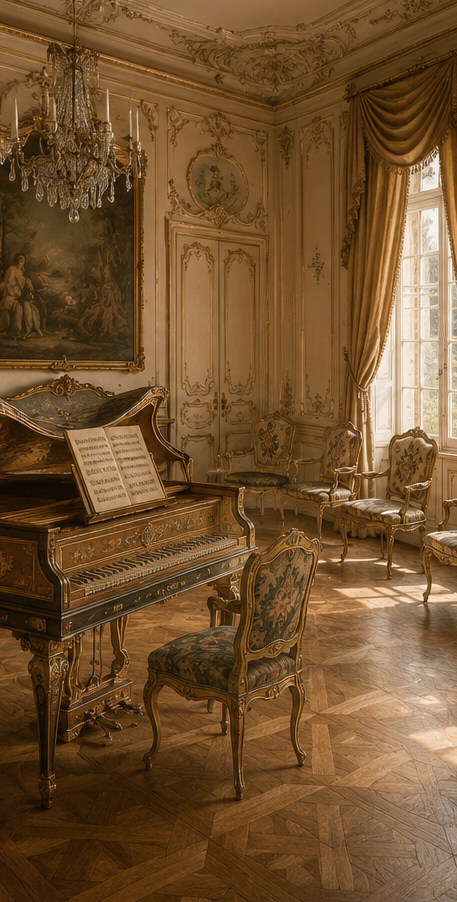
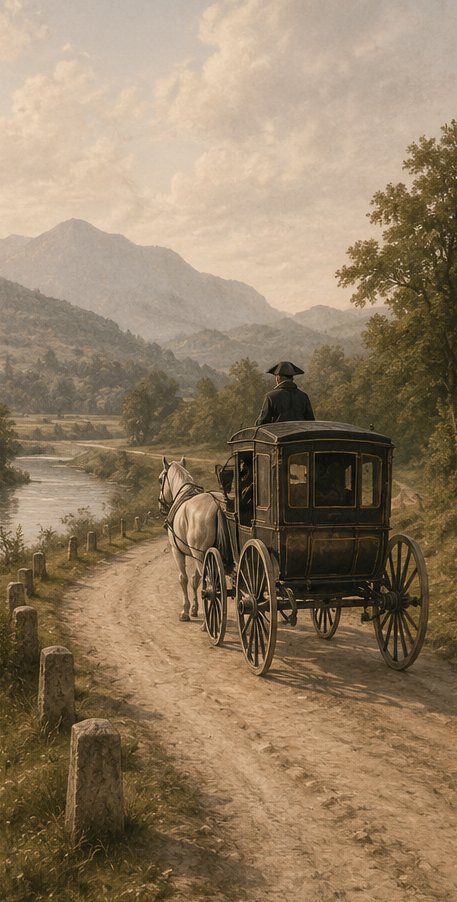
The Mozart family story did not unfold in one comfortable room. It moved through Salzburg, court society, public performances, exhausting journeys, and the fragile economy of patronage. For a mother, those journeys meant more than triumph. They meant illness, waiting, uncertainty, practical labour, and the constant need to protect children who were also public curiosities.

Family context
The Mozart family at the heart of the novel
The story moves through a family shaped by talent, discipline, expectation, and love. The novel does not ask readers to know the whole Mozart biography before beginning. It gives the family world a human centre.
|
Maria Anna “Nannerl” Mozart
Wolfgang Amadeus Mozart
Reader fit
Readers who may enjoy this book
- Readers looking for historical fiction about Mozart, his family, or the world around classical music.
- Book clubs interested in motherhood, sacrifice, ambition, and the private costs of public achievement.
- Readers who enjoy biographical fiction told through a less familiar woman’s point of view.
- Fans of literary historical novels where the emotional life matters as much as the famous name.
- Readers drawn to stories about women standing beside history rather than safely inside its spotlight.
Similar reading moods
Similar Reading Moods
If you enjoy these kinds of historical novels, A Very Different Drummer may appeal to readers who enjoy historical fiction that re-enters a famous life through a less expected doorway: the sister, the wife, the mother, the servant, the witness, the person who saw the private cost before history smoothed it into legend.
It belongs beside Mozart-related fiction, women-centred historical fiction, biographical novels, and reflective literary fiction about families caught in the orbit of genius. Readers who enjoyed Nancy Moser's Mozart's Sister or Richard Coudenhove's Becoming Mozart may recognise a similar fascination with the people who stood closest to extraordinary lives.
Sample
Read an Excerpt
From Chapter One of A Very Different Drummer: The Mother of Mozart.
It was a fallacy that the only thing needed to make a fortune was a pretty face because Anne Marie had been told often enough that her eyes were too bright and her quick warm smile immodest in one kept alive by the efforts of other people.
Charity girl.
Her mother was still living and so she was not precisely an orphan but her late father's position as District Superintendent and Revenue Officer had made her eligible for a place in the Orphanage School. Now she was past leaving age but allowed to stay on as an assistant.
She peered through the spy hole — butcher, baker, candlestick maker (all of whom should have gone to the back door), rich man, poor man, beggar-man, thief (ditto), Bishop, King, Cardinal?
Only two young men with instrument cases under their arms.
One young man had an impudent eye which in turn registered surprise and delight while he pretended to fall backwards from the top step.
“Andreas Schachtner at your service,” he said, bowing. “I assume that I am addressing the Mother Superior?”
Unable for the moment to think of a suitable reply, Anna Maria turned to his companion. He was a handsome young man, his mouth shapely although his lips were folded rather severely, perhaps for his friend's cheek. His nose was straight and his brows winged. He looked back at her through intensely blue eyes.
“Leopold Mozart,” he said in a pleasant, light voice, and he too bowed.
She curtseyed. Never before had visitors bowed at her or even introduced themselves and she was almost overcome.
“Anna Maria Pertl, spinster of this parish.”
Years later, after chance meetings, music drifting through Salzburg streets, and a friendship carried forward by memory and circumstance, Anna Maria would once again find herself face to face with Leopold Mozart.
Only two days later Anna Maria dropped a small package in a shop doorway. A man entering picked it up, handing it to her with a bow.
Leopold Mozart and Anna Maria Pertl stood in that shop doorway and smiled at each other until someone pushed impatiently between them.
For reading groups
Book club discussion questions
- How does the novel change the way we think about Mozart by focusing on his mother?
- What does Anna Maria sacrifice, and which sacrifices are visible only to her?
- How does the book portray the difference between talent and the machinery built around talent?
- Where does love become duty, and where does duty become a burden?
- How does travel shape the family’s relationships?
- What role does Leopold’s ambition play in the emotional life of the household?
- How does the novel handle the tension between public wonder and private exhaustion?
- What does the title suggest about Anna Maria’s own rhythm or independence?
- Which scenes most clearly show Wolfgang as a child rather than a legend?
- Why are stories about the women around famous men often harder to recover?
Continue the Mozart story
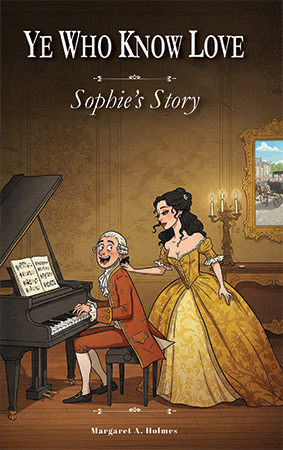
Ye Who Know Love: Sophie’s Story
Continue into the later Mozart world with Ye Who Know Love: Sophie’s Story, Margaret A. Holmes’ historical novel told through Sophie Weber, sister of Constanze Mozart. Where A Very Different Drummer looks toward the mother behind the child prodigy, Ye Who Know Love moves closer to the domestic world surrounding Mozart’s later life.
Questions readers often ask
FAQ
Who was Anna Maria Mozart?
Anna Maria Mozart, born Anna Maria Pertl, was the mother of Wolfgang Amadeus Mozart and Maria Anna “Nannerl” Mozart. This novel imagines her life from within the family world that surrounded Mozart’s childhood and early fame.
Is A Very Different Drummer based on real historical people?
Yes. The novel is inspired by real people in the Mozart family, including Anna Maria Mozart, Leopold Mozart, Maria Anna Mozart, and Wolfgang Amadeus Mozart. It is historical fiction, not a formal biography.
Is this book mainly about Mozart?
Mozart is central to the world of the book, but the emotional centre is Anna Maria. The novel looks at what a child prodigy’s life may have meant to the mother who loved him before the world applauded him.
Is this suitable for book clubs?
Yes. The novel gives book clubs plenty to discuss: motherhood, ambition, family pressure, music, sacrifice, travel, and the way history remembers some lives while almost erasing others.
Margaret A. Holmes is a New Zealand writer whose lifelong love of music, history, and storytelling shaped much of her work.
The mother of nine children, Holmes brings a deeply personal understanding of family life, sacrifice, resilience, and human relationships to her writing.
A passionate musician, she played piano, violin, harp, piano accordion, and clarinet, bringing a rare emotional and musical sensitivity to her novels. Her Mozart-related works grew from a profound admiration for the composer and the world surrounding the Mozart family, combining historical research with deeply human storytelling.
Alongside these larger works, Holmes also wrote a range of short stories, around 50 poems, and other unpublished material, some of which Holmes Frontier hopes to gradually preserve and share in the future. In her younger days, she was a very capable sketch artist; some of her sketches will be added to this website at a later stage.
Holmes Frontier is an independent literary imprint dedicated to thoughtfully produced books, historical works, memoir, and archival publishing projects.
Alongside contemporary titles, Holmes Frontier also preserves and presents historical material connected to earlier generations, photography, and family collections, with a focus on enduring storytelling and careful presentation.