
Mozart-era historical fiction • Vienna • Sophie Weber
Ye Who Know Love
A historical literary novel about Sophie Weber, the Mozart family, and the private world behind public genius.
In eighteenth-century Vienna, young Sophie Weber watches Wolfgang Amadeus Mozart enter her family’s life — brilliant, restless, and impossible to ignore.
As ambition, loyalty, love, and loss reshape the Mozart and Weber households, Sophie becomes witness to the private world hidden behind public genius.
Ye Who Know Love: Sophie’s Story is an intimate historical novel set within the emotional world surrounding Mozart’s final years.
Synopsis
“Wolfgang’s counterpart — a friendship in perfect harmony. The silent accompaniment to his genius.”
In 1778, ten-year-old Sophie Weber watches Wolfgang Mozart enter her family’s life — brilliant, restless, and impossible to ignore.
He arrives first as her sister’s suitor, then gradually becomes part of the complicated emotional fabric of the Weber household. Through Sophie’s perceptive gaze, we witness what history rarely preserves: the small domestic negotiations, private tensions, rivalries, tenderness, and quiet wounds unfolding behind public brilliance.
As ambition strains the family and loyalties begin to shift, Sophie comes to understand that genius does not shield anyone from suffering — and that love, in all its forms, carries a cost.
Set within the world of eighteenth-century Vienna and the lives surrounding Wolfgang Amadeus Mozart, Ye Who Know Love: Sophie’s Story is an intimate historical novel from the margins of greatness — where the truest stories are often found.
Why Sophie Weber?
Mozart’s life has often been told through the familiar centres of fame: the prodigy, the composer, the public genius, the myth. But every famous life also leaves a quieter circle behind it — family members, witnesses, servants, sisters, friends, rivals, and survivors whose names appear only briefly in the historical record.
Sophie Weber belongs to that quieter circle. As the younger sister of Constanze Mozart, she stood close to the world of Wolfgang Amadeus Mozart without being the centre of it. That position makes her a powerful fictional witness: near enough to feel the heat of genius, but far enough away to notice what fame can blur.
Ye Who Know Love uses Sophie’s imagined voice to explore the emotional cost of talent, loyalty, marriage, family duty, grief, and memory. It is not a museum piece or a formal biography. It is a novel about what it may have felt like to live beside greatness — and to keep living after the music stops.
A Mozart Novel from the Margins
Readers searching for a Mozart novel often expect the composer himself to dominate every page. This book takes a different path. Wolfgang Amadeus Mozart remains central to the world of the story, but the novel’s emotional centre belongs to Sophie Weber and the domestic life surrounding the Mozart and Weber families.
The result is a Mozart-era historical novel concerned with the rooms behind the performance: family conversations, changing loyalties, private disappointments, musical devotion, social pressure, illness, and the ordinary human arrangements that sit beneath extraordinary achievement.
For readers interested in Mozart historical fiction, Constanze Mozart, Sophie Weber, or women’s lives in eighteenth-century Vienna, the book offers a quieter and more intimate way into a famous story.
Vienna, Family, Music, and Memory
The Vienna of Ye Who Know Love is not simply a decorative backdrop. It is a city of music, reputation, patronage, social ambition, family bargaining, and uneasy survival. Public achievement and private insecurity sit side by side.
Within that world, the Weber sisters must navigate dependence, expectation, talent, marriage, money, affection, and the difficult question of what women are allowed to become. Sophie’s story is shaped by the same forces that shape many historical lives: what is remembered, what is hidden, and who is allowed to speak.
Read an Excerpt
From Chapter One of Ye Who Know Love: Sophie’s Story.
…and so he had insisted on sharing expenses as well as profits.
“Now listen Cäcile, it is no good complaining, Aloysia has gained valuable experience and I thought it fair although to give the young fellow credit he didn’t want to accept my contribution.”
The questions were repeated when Aloysia came in: did she do them credit, did they have enough to eat, were the beds aired sufficiently, what was the palace like — did Mozart behave?
“The beds were a bit damp,” Aloysia said, “the rooms only so-so, it was too cold to walk about in the gardens much but they would be pretty in a few weeks, everybody praised my singing.”
Her eyes sparkling with the unaccustomed attention, she added, “Of course they must have known Mr. Mozart from a child, it is funny how people — the nobility I mean — talk to him, like an equal almost, especially the princess. But he never puts on airs.”
“Oh Sophie, the funniest thing happened on the day, the carriage got stuck — oh, worse than usual and it happened regularly — and he helped the men dig us out and calmed the horses. He was very good with them, but he looked funny with his shoes and stockings covered with mud and his coat wet through. He changed his shoes before we went to the palace but, would you believe it, he bowed to the princess with a big streak of mud across his face…”
In an awed voice she added, “But the princess didn’t mind, she took both his hands, kissed his cheek, and called him her dearest boy.”
“Oh!” said Mrs. Weber, impressed.
Readers Who May Enjoy This Book
- Readers of historical literary fiction with a strong emotional centre.
- Mozart enthusiasts interested in the lives surrounding the composer.
- Book clubs looking for novels about family loyalty, memory, grief, and artistic legacy.
- Readers interested in women’s historical fiction and overlooked female witnesses to famous lives.
- Readers who enjoy novels set in eighteenth-century Europe, Vienna, and musical households.
If You Like Historical Novels About Hidden Lives
Ye Who Know Love: Sophie’s Story may appeal to readers who enjoy historical fiction that looks past the obvious hero and asks who else was in the room.
Like Nancy Moser's Mozart's Sister, it explores a life lived close to greatness rather than at its centre. The story is less concerned with public achievement than with family relationships, loyalty, memory, love, disappointment, and the quiet emotional currents that shape history from the margins.
It belongs near books that explore art, music, family duty, and women living close to powerful men or famous names — not because it copies those books, but because it shares their interest in the private lives history only partly records.
Readers who enjoy literary historical fiction, biographical novels, Mozart-related fiction, eighteenth-century Vienna, and stories about sisters, households, ambition, and the emotional weather surrounding genius may find themselves at home here.
Book Club Discussion Questions
- Why do you think the novel chooses Sophie Weber as its narrator rather than Mozart himself?
- How does Sophie’s youth affect what she understands — and what she misses?
- Does the novel change how you think about genius?
- How are love and loyalty shown as different forces in the story?
- What does the Weber household reveal about women’s choices in eighteenth-century Europe?
- Which private moment felt most important to the larger story?
- How does music shape the emotional tone of the novel?
- What does Sophie gain, and what does she lose, by standing near greatness?
- How does the novel handle grief and memory?
- What do you think the title Ye Who Know Love means by the end?
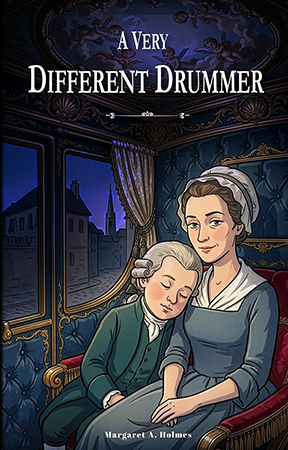
More from the Mozart family world
A Very Different Drummer: The Mother of Mozart
Step back to the beginning of the Mozart story with A Very Different Drummer: The Mother of Mozart, Margaret A. Holmes’ companion historical novel about Anna Maria Mozart, motherhood, sacrifice, family ambition, and the hidden cost of raising a child prodigy.
Frequently Asked Questions
Is Ye Who Know Love based on real historical people?
Yes. The novel is historical fiction inspired by real people connected with Wolfgang Amadeus Mozart, including Sophie Weber, Constanze Mozart, and the Weber family. It uses fiction to enter the private emotional world that formal history often leaves behind.
Who was Sophie Weber?
Sophie Weber was one of the Weber sisters and the younger sister of Constanze Mozart. In this novel, Sophie becomes the lens through which readers enter the household world around Mozart.
Is this a Mozart biography?
No. It is a historical literary novel, not a biography. Mozart is central to the world of the book, but the story is told from the margins of fame, through Sophie Weber and the domestic life surrounding the Mozart and Weber families.
What kind of readers is the book for?
The book is suited to readers of historical literary fiction, Mozart enthusiasts, book clubs, and readers interested in women’s lives, family loyalty, music, and eighteenth-century Vienna.
Where can I buy it?
Use the purchase link on this page to choose a retailer. Availability may vary by country and format.
Margaret A. Holmes is a New Zealand writer whose lifelong love of music, history, and storytelling shaped much of her work.
The mother of nine children, Holmes brings a deeply personal understanding of family life, sacrifice, resilience, and human relationships to her writing.
A passionate musician, she played piano, violin, harp, piano accordion, and clarinet, bringing a rare emotional and musical sensitivity to her novels. Her Mozart-related works grew from a profound admiration for the composer and the world surrounding the Mozart family, combining historical research with deeply human storytelling.
Alongside these larger works, Holmes also wrote a range of short stories, around 50 poems, and other unpublished material, some of which Holmes Frontier hopes to gradually preserve and share in the future. In her younger days, she was a very capable sketch artist; some of her sketches will be added to this website at a later stage.
Holmes Frontier is an independent literary imprint dedicated to thoughtfully produced books, historical works, memoir, and archival publishing projects.
Alongside contemporary titles, Holmes Frontier also preserves and presents historical material connected to earlier generations, photography, and family collections, with a focus on enduring storytelling and careful presentation.